
The landscape of K-pop in 2026 has become increasingly complex, as global superstardom often places artists at the center of geopolitical and social discourse.
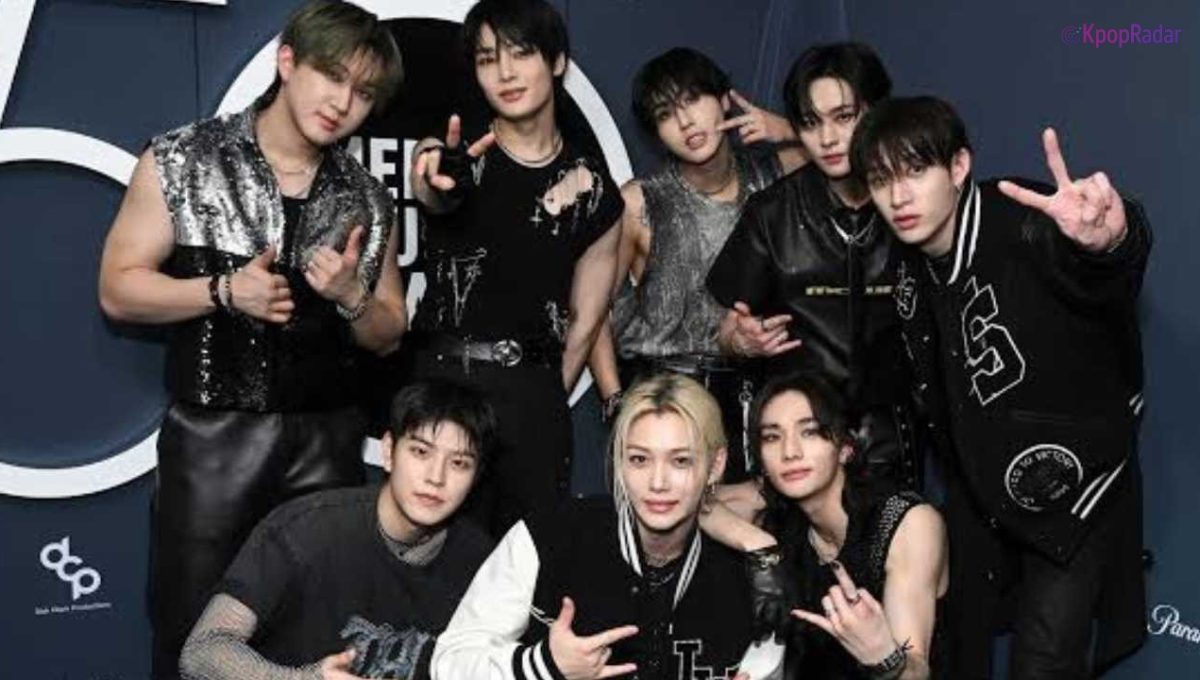
Stray Kids, one of the most prominent groups on the world stage, has not been immune to this phenomenon.
While headlines occasionally surface regarding “international backlash” over alleged political appearances, a closer examination reveals a narrative often driven by digital manipulation, fandom-led advocacy, and the challenges of high-profile brand associations rather than actual political endorsements by the group.
The Distortion of Digital Presence
One of the primary drivers of recent “backlash” narrative is not a specific event, but the weaponization of technology.
In late 2025 and throughout early 2026, Stray Kids became a central target for a sophisticated campaign involving AI-generated deepfakes.
These fabricated videos often depicted members making controversial statements or appearing at events with sensitive political connotations.
This led to a brief but intense period of international confusion, where the “political appearance” in question was actually a digital ghost.
During a recent legal briefing regarding these AI attacks, a representative for JYP Entertainment stated:
“The challenge we face is that once a false image is circulated, the emotional response from the public is immediate, even if the evidence is proven to be a complete fabrication within hours.”
This statement captures the essence of the “backlash” Stray Kids has faced; it is often a reaction to a phantom image.

Bang Chan’s successful pursuit of legal subpoenas in U.S. courts in April 2026 has been a pivotal moment in reclaiming the group’s narrative, proving that the alleged “political” controversies were, in fact, coordinated efforts to damage their global reputation.
Beyond technology, the group has also dealt with the fallout of being associated with state-sponsored promotional content.
Earlier this year, a significant rift occurred when the Korea Tourism Organization (KTO) released content that fans felt was disrespectful to the group.
This sparked a massive wave of international criticism, but the target of the backlash was the government body, not the artists themselves.
This incident highlights how easily the group can be caught in the crossfire of institutional politics, where their mere presence in a government-adjacent campaign leads to heated debate.
Commercial Ambassadorship and Global Sensitivity
The second subheading of this discourse involves the members’ individual roles as global brand ambassadors.
As Hyunjin for Versace and Felix for Louis Vuitton participate in major international fashion weeks and events, their appearances are frequently viewed through a socio-political lens.
In an era where “silence is seen as a statement,” the group’s attendance at certain high-profile events has occasionally drawn criticism from specific regional groups seeking political stances from the artists.
However, the group has consistently maintained a position of neutrality, focusing on their identity as performers.
A industry analyst noted during a 2026 K-pop summit:
“For a group like Stray Kids, every public appearance is a tightrope walk; they are expected to be global icons without accidentally becoming political symbols, a task that is nearly impossible in today’s hyper-connected environment.”
The “backlash” is therefore often a reflection of the audience’s own political expectations rather than any action taken by the group.
As we move through April 2026, Stray Kids continues to navigate these waters with their “dominATE” world tour, which remains largely unaffected by these online storms.
The group’s resilience serves as a testament to the strength of the bond with their fandom, STAY, who have largely moved from being passive consumers to active defenders against misinformation.
While the internet may continue to churn out narratives of controversy, the reality for Stray Kids remains focused on the stage.
They are proving that in the face of digital distortion and political projection, the most powerful response is a commitment to the music and the truth.