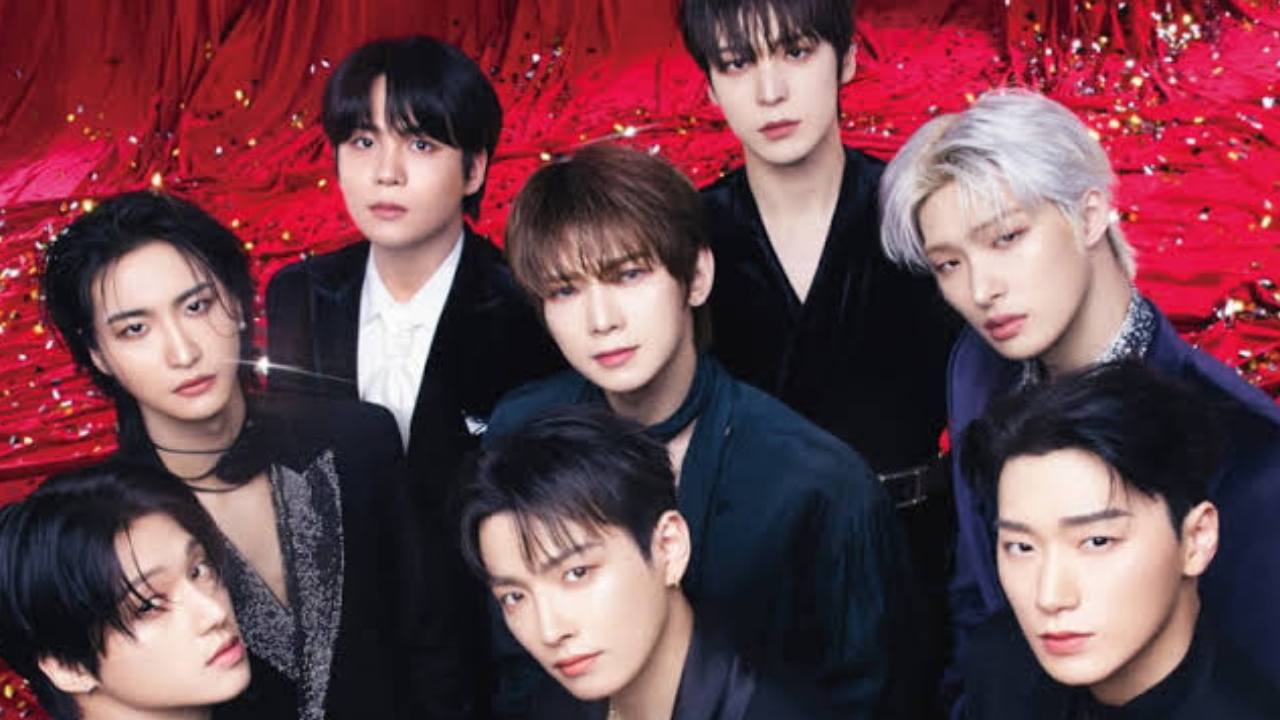


To understand the landscape of LGBTQ+ representation in K-pop, it is important to distinguish between the pioneering work of the group Lionesses and the historical “firsts” of K-pop girl groups, as both represent significant but different milestones in the industry.
Lionesses: The First Openly LGBTQ+ Boy Group
While often associated with discussions about LGBTQ+ representation, Lionesses is actually the first openly LGBTQ+ boy group in the K-pop industry.
Debuting on November 2, 2021, with their single “Show Me Your Pride,” the group made history by being entirely composed of out and proud members.
The group was founded by leader Bae Dam-gun, who envisioned a space where queer artists could thrive without hiding their identities.
Their music serves as both a form of activism and a celebration of queer joy. In a powerful statement regarding their mission, Bae Dam-gun said:
“I wanted to create a team that could give hope to young LGBTQ+ people who are dreaming of becoming idols.
We want to show that we can exist and be successful just as we are, without needing to hide our true selves behind a curtain.”
Their discography, including tracks like “It’s OK to be me” and “Will You Be My Groom?”, directly addresses themes of self-acceptance and same-sex love, which are still considered sensitive topics in South Korea’s conservative social climate.
By operating as independent artists, Lionesses has maintained creative control over their message, proving that there is a dedicated global audience for authentic queer narratives within the K-pop genre.

The Foundation: S.E.S. and the First Girl Group Era
When discussing the “first” K-pop girl group in the modern sense, the title belongs to S.E.S., who debuted under SM Entertainment in 1997.
While there were female groups before them, S.E.S. (consisting of Bada, Eugene, and Shoo) established the “idol” blueprint that every group- including Lionesses- has followed since.
S.E.S. introduced the concept of stylized choreography, distinct member personas, and the “fairy” aesthetic that defined the first generation of K-pop.
Their success opened the doors for other legendary groups like Fin.K.L and Baby V.O.X. Bada, the group’s leader, once reflected on their groundbreaking debut, saying:
“When we first started, there was no map for what a girl group should be.
We had to build the road ourselves and prove that female artists could be just as influential and commercially successful as the boy bands of that time.”
The connection between these two milestones is found in the evolution of the industry. The “First Girl Group” era focused on establishing the commercial viability of idols, while the “Lionesses” era represents the industry’s gradual shift toward social awareness and inclusivity.
While the first girl groups fought for a seat at the table in terms of gender, groups like Lionesses are now fighting for a seat at the table in terms of identity and representation.
Both represent a “first” that moved the needle for Korean music on a global scale.